Madame Coquenard
Madame Coquenard, the wife of the miserly procurator of the Chatelet, is one of the most vividly drawn secondary characters in The Three Musketeers—a woman whose age, avarice, and desperate passion for the vain Musketeer Porthos create a sustained comic counterpoint to the novel's heroic adventures. She is at once a dupe and a manipulator, a figure of ridicule and of pathos, whose entanglement with Porthos reveals the mercenary underside of gallantry in seventeenth-century Paris.
Identity and Introduction
Madame Coquenard is first mentioned indirectly when the host of the inn at Chantilly reveals to d'Artagnan that Porthos's supposed "duchess" is in fact the aging wife of a procurator, living in the Rue aux Ours and at least fifty years old. The host, who had intercepted a letter from Porthos to his mistress, describes her as "the old wife of a procurator of the Chatelet" who "although she is at least fifty, still gives herself jealous airs." This revelation punctures Porthos's elaborate pretensions: the magnificent baldric he had boasted of, the great lady he claimed as his patroness, are revealed as the purchases and favors of a middle-aged bourgeoise. Her name, Coquenard, is itself a comic invention, suggesting both coquetry and miserliness. She lives with her elderly husband in the Rue aux Ours, a street associated with commerce and the legal profession, far from the aristocratic circles Porthos pretends to inhabit.
The Procurator's Dinner and the Economy of Love
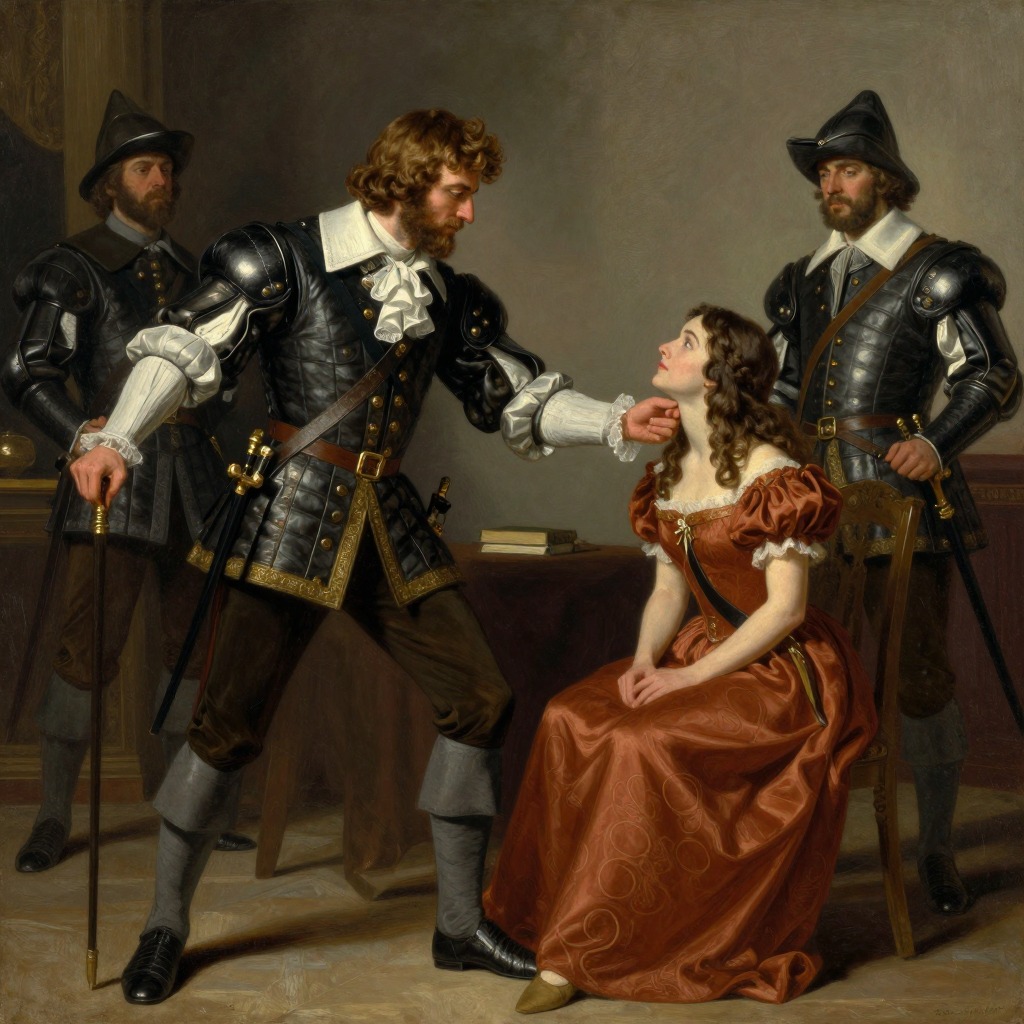
The central comic set piece involving Madame Coquenard is the dinner she arranges for Porthos at her home, an episode that exposes the gap between the Musketeer's expectations and the reality of a procurator's household. Porthos arrives expecting a feast befitting a duchess; instead, he is served a thin soup, a boiled fowl so old it is barely edible, and haricot beans. The wine is cheap Montreuil, and the portions are meager. The procurator, M. Coquenard, is a frail, suspicious old man who watches every morsel, while the clerks of the office are barely fed. Madame Coquenard, caught between her desire to impress her lover and her husband's stinginess, performs a delicate balancing act: she carves the fowl with exaggerated ceremony, giving her husband the feet and herself the neck, while Porthos receives only a wing. The dinner is a masterpiece of miserly hospitality, and Porthos leaves hungry and humiliated. Yet the episode also reveals Madame Coquenard's power: she controls the household keys, she can manipulate her husband, and she is the one who ultimately decides how much to give Porthos. The dinner is not merely a failure of generosity but a negotiation: she is testing how little she can give while still keeping her lover.
The Negotiation for Porthos's Equipment
When Porthos needs money to equip himself for the campaign, he turns to Madame Coquenard, and their relationship becomes explicitly transactional. The negotiation takes place after the disastrous dinner, in a private room, and it is a masterpiece of comic bargaining. Porthos, wounded in his vanity, demands a horse, a horse for his lackey, and a valise. Madame Coquenard, torn between love and avarice, tries to economize at every turn. She offers a mule instead of a horse for Mousqueton, and an empty valise from her husband's collection. Porthos insists on a well-filled valise, and the bargaining continues until they agree on eight hundred livres in cash, plus the horse and mule. The scene is a parody of courtly love: the language of passion is used to negotiate a price, and the outcome is a compromise between desire and thrift. Madame Coquenard emerges as the more practical of the two, aware that her wealth is her only hold on the handsome Musketeer, while Porthos, for all his bluster, is dependent on her generosity.
The Church Encounter and the Rival
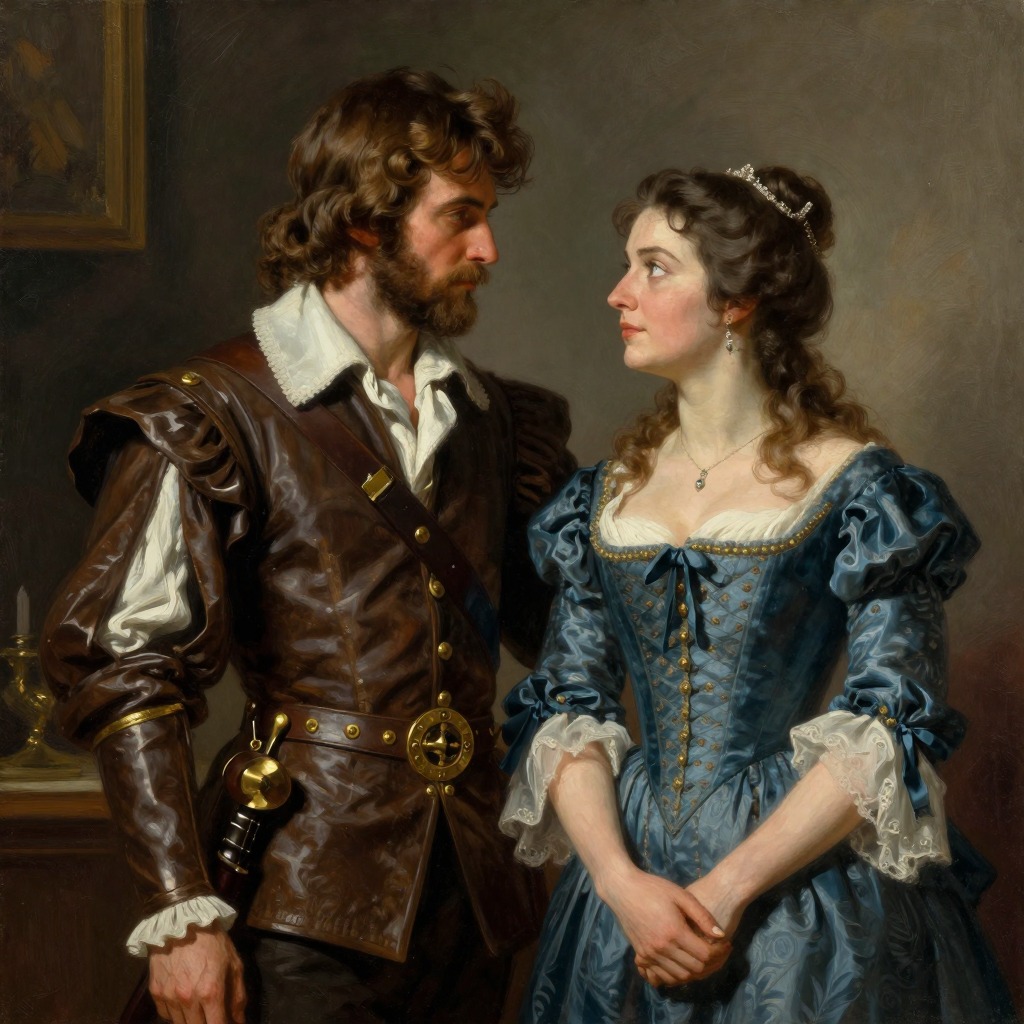
Madame Coquenard's jealousy is dramatized in a scene at the church of St. Leu, where she observes Porthos paying court to another woman—a beautiful lady with a Negro page and a maid, whom Porthos claims is a duchess. The procurator's wife, hidden in the crowd, watches as Porthos gives holy water to the rival, and her fury is barely contained. When she confronts him afterward, Porthos pretends confusion and then turns the tables, reproaching her for having abandoned him when he was wounded at Chantilly. The scene is a brilliant piece of emotional manipulation: Porthos uses her jealousy to extract a better bargain, while Madame Coquenard, despite her anger, is unable to resist him. She agrees to a reconciliation, and the meeting ends with a promise of further financial support. The episode reveals the power dynamics of their relationship: Madame Coquenard is wealthier and older, but Porthos has the advantage of youth, beauty, and social position, and he uses these to keep her in a state of anxious devotion.
The Reversal: The Horse and Mule
The comic climax of the relationship comes when Porthos, having received a horse and mule from Madame Coquenard as part of their bargain, discovers that the animals are worthless—a yellow nag and a broken-down mule, the very horse on which d'Artagnan had first arrived in Paris. Porthos, furious, sends Mousqueton to return the animals to the procurator's door, and then confronts Madame Coquenard in the cloister of St. Magloire. The scene is a masterpiece of comic rage: Porthos accuses her of trying to cheat him, threatens to break off the relationship, and demands proper compensation. Madame Coquenard, terrified of losing him, promises to make amends, and the episode ends with a new agreement: she will give him the money he needs, and he will pretend to be her cousin. The reversal is complete: the woman who tried to economize is forced to pay more, and the Musketeer who was humiliated at her dinner table emerges victorious. Yet the victory is ambiguous, for Porthos remains dependent on her goodwill, and the relationship is now openly a matter of commerce.
Thematic Significance: Bourgeois Love and Comic Satire
Madame Coquenard embodies the novel's satirical treatment of bourgeois pretension and the commodification of love. She is a figure of fun—her age, her jealousy, her miserliness are all exaggerated for comic effect—but she is also a recognizable type: the wealthy older woman who buys the attention of a younger man. Her relationship with Porthos parodies the courtly love conventions that govern the novel's more romantic plots: where d'Artagnan and Constance Bonacieux love for love's sake, Porthos and Madame Coquenard love for money. Yet the satire is not cruel; Dumas allows Madame Coquenard a certain dignity in her persistence, and her eventual capitulation to Porthos's demands is a victory of desire over prudence that makes her, in her way, as passionate as any of the novel's younger lovers. She is also a figure of the bourgeoisie in a novel dominated by aristocrats: her world of procurators, clerks, and careful accounting is the economic foundation on which the glamorous world of the Musketeers depends, and her money, however grudgingly given, enables Porthos to play his part in the heroic drama of the siege of La Rochelle.